


Introduction
INAPA 2026 brought Southeast Asia’s aftermarket conversations into sharper focus. From May 20 to 22 at JIExpo Kemayoran in Jakarta, distributors, OEM sourcing teams, and fleet buyers were not just looking at what suppliers could offer today. They were asking what their parts programs need to look like over the next few years, and where Vietnam-based manufacturing fits into that plan.
Southeast Asia Auto Parts Sourcing is Changing
INAPA 2026 showed a market planning further ahead. Buyers were weighing how trade rules, market changes, and supplier consistency could affect their parts programs over the next few years.
How FTAs are Shaping the Sourcing Scene
The most useful conversations of the week happened around supply chain concentration risk, not tariffs.
For North American buyers, Vietnam-origin auto parts have a clear sourcing advantage: they sit outside Section 301 tariffs, AD/CVD exposure, and the recent investigation on Chinese CGI brake drums.
At INAPA, the sourcing math looked different. In Southeast Asia, many buyers operate within ASEAN and ASEAN-linked trade agreements, including ATIGA, ACFTA, AKFTA, AJCEP, AIFTA, AANZFTA, and RCEP.
The dense FTA network can narrow the tariff gap between regional and neighboring suppliers, so tariff alone is often not the deciding factor.
That is where Vietnam’s position becomes more relevant. For many Southeast Asia lanes, Vietnam offers practical logistics advantages, ASEAN-origin flexibility, and lower exposure to trade actions that periodically target Chinese-origin auto parts globally.
The advantage is not just “lower tariff.” It is a cleaner risk profile for distributors building a parts program they need to defend over several years.

ARCHION Is Live, and Southeast Asia Is Adjusting
Trade agreements were only one part of the sourcing conversation.
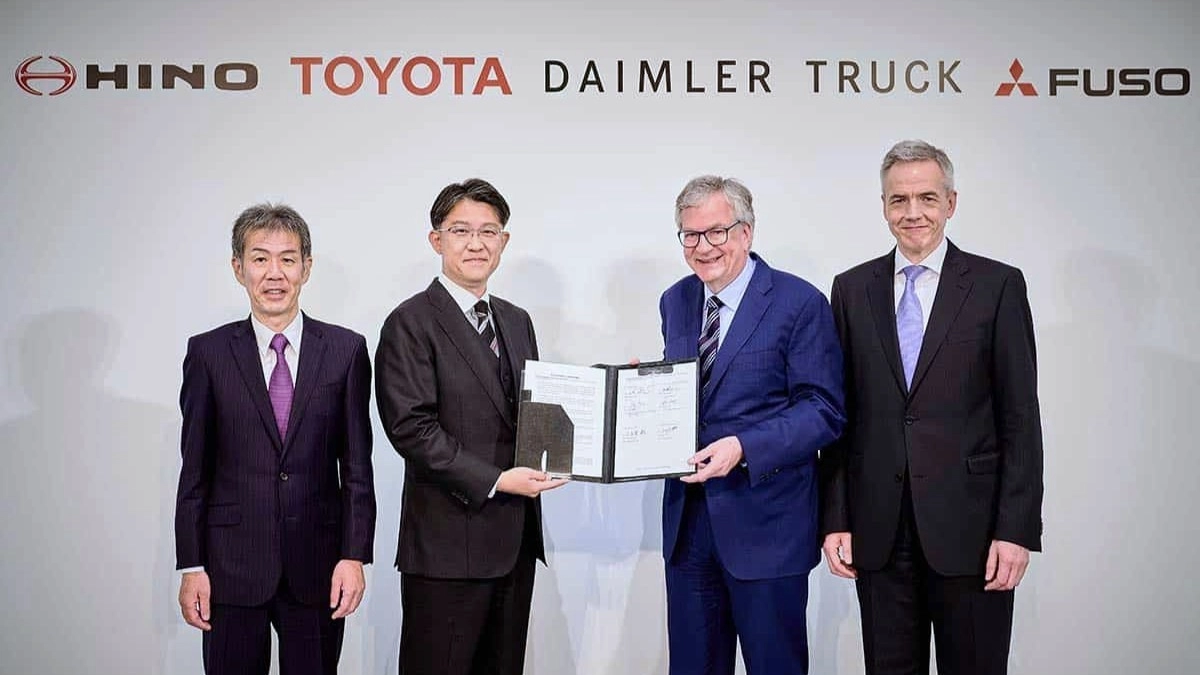
On April 1 this year, Mitsubishi Fuso and Hino Motors formally merged under a new holding company called ARCHION, jointly owned by Toyota and Daimler Truck.
ARCHION is targeting a Tokyo Stock Exchange Prime Market listing, with the combined entity expected to dominate medium-duty and heavy-duty truck volumes across Asia-Pacific.
Distributors carrying Hino-platform and Fuso-platform inventory are working through what shared platforms and Japanese plant consolidation will mean for their parts books. Parts coverage, quality proof, and supplier consistency are now crucial considerations.
This opens a door for suppliers who can demonstrate OEM-grade quality on universal-fit components.
Four Questions That Came Up Repeatedly
Beyond the macro picture, our team received many practical questions about TBP Auto brake drums. Buyers wanted to understand where the drums are made, how they are tested, and how TBP Auto can support a more resilient heavy-duty brake program.
"Where exactly are these drums made?"
TBP Auto’s heavy-duty brake drums are cast and finish-machined in Vietnam by a Western-managed operation, with batch traceability built into the process.
"Who tested them, and to what standard?"
Our drums are tested by Link Engineering Company to FMVSS 121. The standard casting itself meets SAE J431 G3500, and we verify dimensional accuracy on a ZEISS SPECTRUM CMM.
"Do you supply any parts other than brake drums?"
Distributors managing a full heavy-duty brake program don't want a separate sourcing process for every item, which is why TBP Auto is also working with certain customers on sourcing partnerships – helping them vet other Vietnam-based heavy-duty parts suppliers using the same process discipline.
"What does your quality system look like?"
We operate under ISO 9001, ISO 14001, and ISO 45001. IATF 16949 is in progress through Intertek as the certification body, with closure expected this year.
>>> Read more: TBP-054.1640 Brake Drum Earns FMVSS 121 - Now Even Better

Reading the Regional Reset
One of our biggest takeaways from INAPA 2026 is that Southeast Asia’s aftermarket is entering a more selective phase.
The supplier base is reshuffling – driven by regional economics, Japanese OEM consolidation, and infrastructure investment across Trans-Sumatra and the inter-island corridors that keep pushing fleets toward heavier-duty configurations.
Vietnam is becoming part of that shift for a reason. It gives distributors a manufacturing base with growing credibility, a different trade-risk profile, and proximity to the region’s commercial vehicle demand.
At TBP Auto, we remain focused on what buyers need: traceable production, tested components, and a quality system that supports long-term supply.
If you are reviewing your supply after INAPA 2026, we are ready to continue the conversation. Request a quote or contact our team today.
